

You have taped the last box, cleared out the closets, and finally feel ready for moving day. Then your moving crew spots a propane tank beside the grill or a half-full can of gasoline in the garage—and it cannot go on the truck.
Professional movers have to protect your belongings, their crew, and everyone sharing the road. That means some everyday household products cannot be loaded because they may leak, ignite, explode, spoil, or create another safety hazard. Other items are simply too personal or valuable to hand over.
Before your move in Rogers, Bentonville, Fayetteville, Springdale, or elsewhere in Northwest Arkansas, set these 15 categories aside. Policies can vary by company and by whether your move crosses state lines, so always ask your mover about a questionable item before moving day.
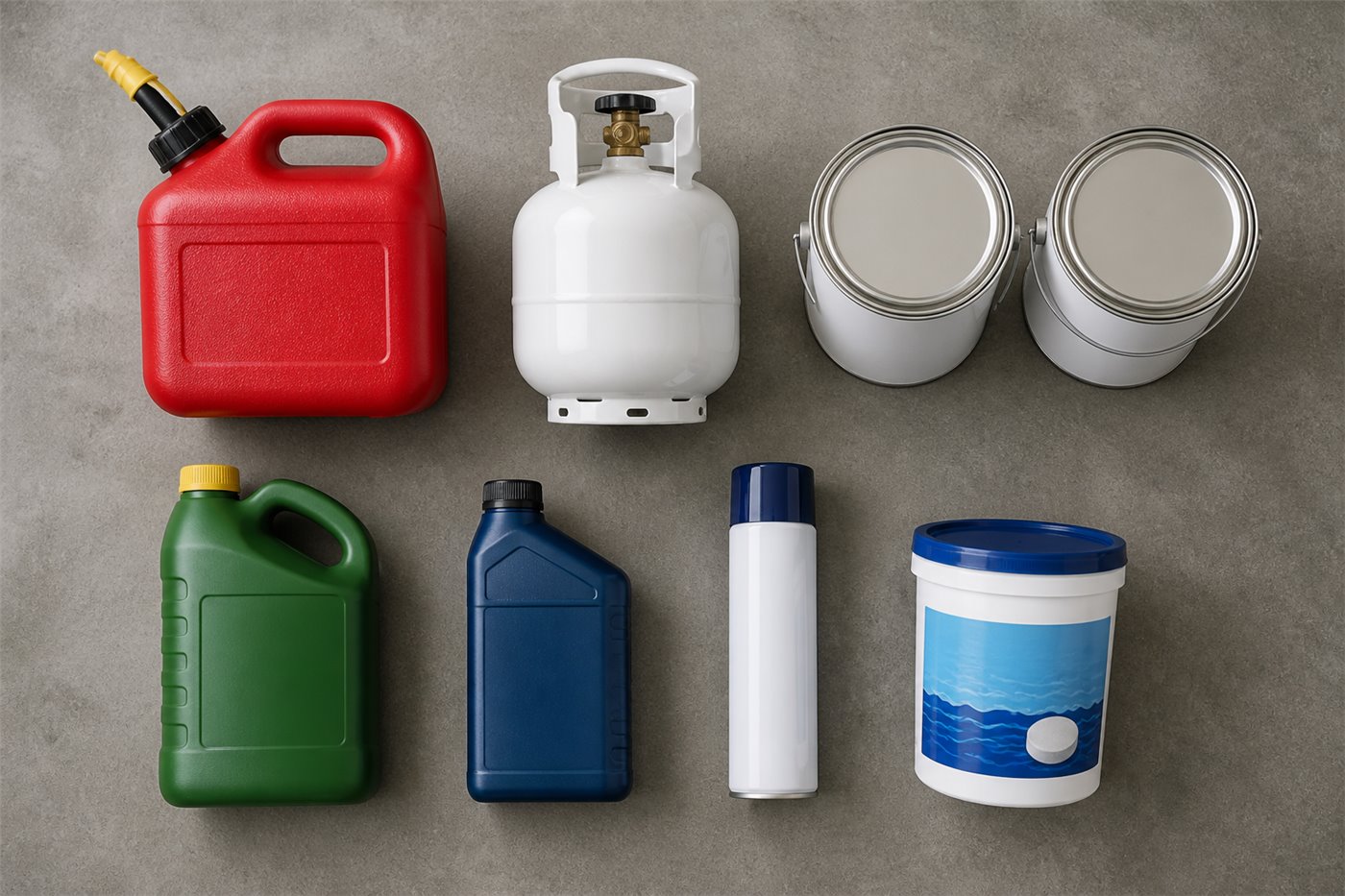
1. Gasoline and other fuels
Gasoline, diesel fuel, kerosene, lighter fluid, and other flammable fuels should never be packed with household goods. Even a small leak can create dangerous fumes or a fire risk inside a moving truck.
Drain fuel from lawn mowers, trimmers, generators, and similar equipment well before the move. Ask your mover how clean and dry the equipment must be before loading.
2. Propane tanks and compressed-gas cylinders
Leave propane cylinders, oxygen bottles, and other compressed-gas tanks off the truck—even when they seem empty. Residual gas and pressure may remain inside. Contact the tank supplier or a local hazardous-waste program for safe handling options.
3. Fireworks, ammunition, and explosives
Fireworks, ammunition, black powder, blasting caps, and similar materials present an obvious fire or explosion risk. Do not hide them inside an ordinary box. Ask the appropriate retailer, law-enforcement agency, or local disposal authority how to transport or surrender them safely.
4. Paint, stain, and paint thinner
Many paints, stains, varnishes, solvents, and paint thinners can leak or release flammable fumes. Rather than moving nearly empty cans, consider donating usable products where accepted or taking leftovers to an approved household hazardous-waste facility.
5. Pesticides, herbicides, and fertilizers
Weed killer, insecticide, rodent poison, and certain fertilizers may be toxic, corrosive, reactive, or combustible. Keep every product in its original labeled container and follow the label and local disposal rules. Never combine leftover chemicals to save space.
6. Pool and spa chemicals
Chlorine, shock treatments, acids, and other pool chemicals can react dangerously with heat, moisture, or incompatible products. Arrange for proper local disposal or purchase fresh supplies after your move.
7. Strong cleaners and corrosive chemicals
Bleach, ammonia, drain opener, oven cleaner, and other strong household chemicals may leak, corrode surfaces, or react with one another. Never mix them, and do not pour them onto the ground or into a storm drain. Follow product labels and local hazardous-waste guidance.
8. Motor oil, antifreeze, and automotive fluids
Used motor oil, antifreeze, brake fluid, transmission fluid, and similar products can spill and contaminate an entire shipment. Many automotive shops or community programs accept some of these fluids for recycling, but call first.
9. Certain batteries
Loose lithium-ion batteries, damaged batteries, vehicle batteries, and other high-risk batteries require special care because they can short-circuit, leak, or catch fire. Do not toss loose batteries into a box. The EPA recommends protecting removable battery terminals with nonconductive tape or placing each battery in a separate plastic bag when preparing them for an appropriate recycling or take-back program.
10. Aerosol cans and fire extinguishers
Spray paint, cooking spray, insect repellent, and other aerosol cans are pressurized. Fire extinguishers are pressurized too. Heat and damage can turn these containers into serious hazards, so confirm appropriate disposal, recycling, or servicing options locally.
11. Perishable and open food
Frozen food, refrigerated items, produce, and opened packages can spoil, attract pests, leak, or create odors. Plan meals around what is left, donate eligible unopened food, and transport a small cooler yourself if your trip is short enough to keep food at a safe temperature.
12. Plants
Plants are fragile, sensitive to temperature changes, and sometimes restricted when crossing state lines because they can carry pests or disease. Even when plants are allowed, a hot or cold moving truck is rarely a healthy environment. Ask your mover about local moves and check destination rules before transporting plants across state lines.
13. Pets and live animals
Dogs, cats, birds, reptiles, fish, and other animals do not belong in the cargo area of a moving truck. Arrange a safe, climate-controlled trip with you, a trusted caregiver, or a qualified pet-transport service. Keep food, water, medications, identification, and veterinary records within reach.

14. Prescription medicine and medical essentials
Even if a medication is not prohibited, pack it with you—not in the moving truck. Delays, heat, cold, or an urgently needed dose can turn a routine move into an emergency. Keep prescriptions, medical devices, and several days of essential supplies in a clearly marked personal bag.
15. Cash, documents, jewelry, and irreplaceable keepsakes
Carry cash, passports, birth certificates, deeds, financial records, jewelry, keys, digital backups, and truly irreplaceable keepsakes yourself. These items may not be dangerous, but their value or importance makes them unsuitable for an ordinary moving box.
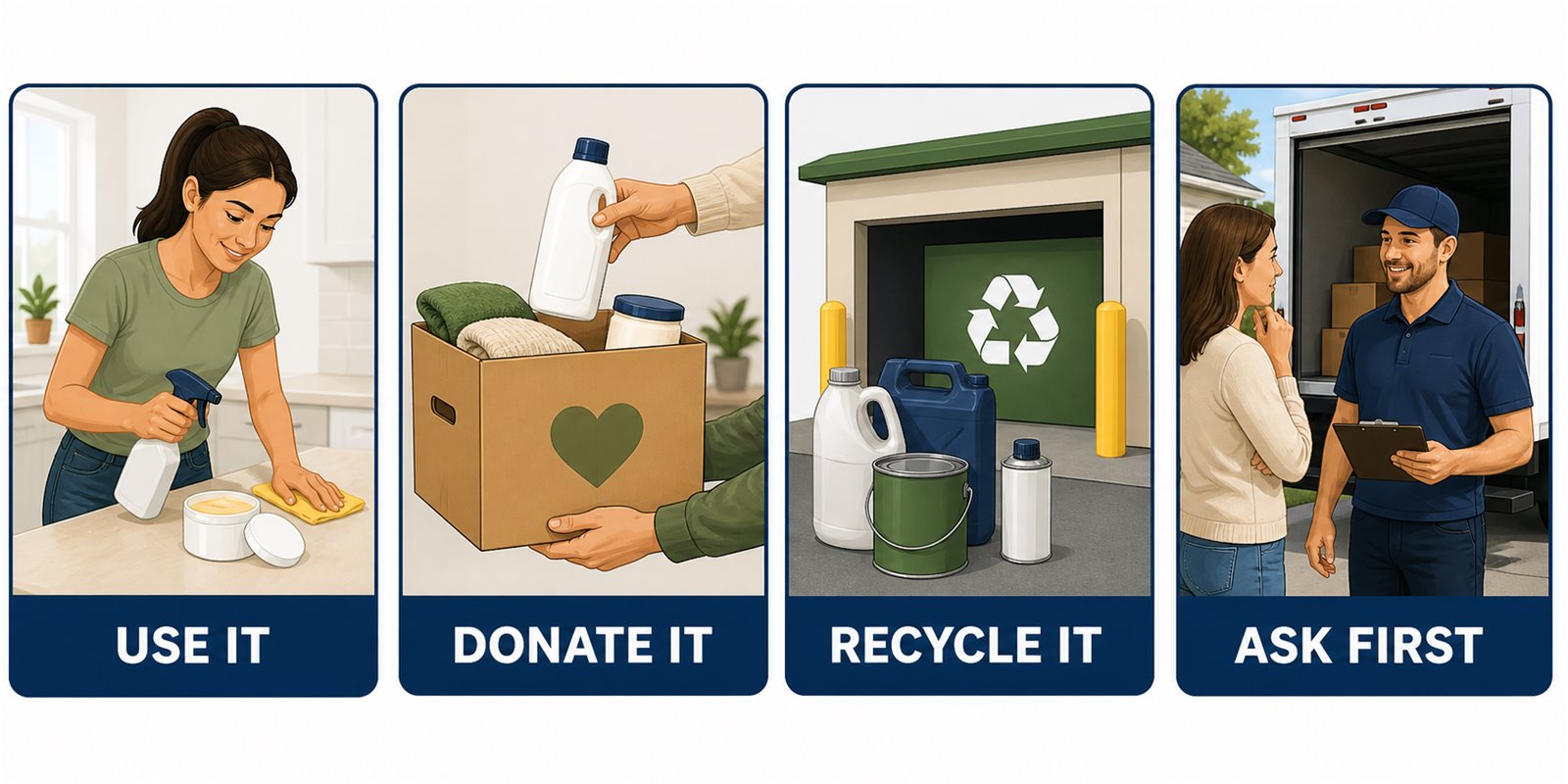
What should you do with prohibited items?
Start sorting early rather than leaving a garage full of chemicals for moving morning. Use this simple plan:
- Use it: Stop buying duplicates and safely use suitable products before the move.
- Donate it: Offer usable, unopened products only to organizations that confirm they accept them.
- Recycle or dispose of it properly: Read the label and contact your city, county, or solid-waste authority for current instructions.
- Carry it yourself only when lawful and safe: Some personal essentials can travel with you, but hazardous materials still require proper handling.
- Ask before moving day: Send your mover a list or photo if you are unsure about an item.
The U.S. Department of Transportation identifies examples such as paints, paint thinner, lighter fluid, gasoline, fireworks, oxygen bottles, propane cylinders, and automotive chemicals as dangerous or hazardous materials. The EPA likewise advises following product labels and local household hazardous-waste instructions rather than pouring chemicals down drains, onto the ground, or into storm sewers.
A safer move starts before the truck arrives
A quick walkthrough of your garage, shed, kitchen, bathrooms, and utility room can prevent delays on moving day. Look for anything flammable, pressurized, corrosive, toxic, perishable, alive, medically necessary, or impossible to replace.
Not sure whether something can be loaded? Razorback Moving can help you prepare for a smoother move in Northwest Arkansas and beyond. Schedule your move online and ask about any unusual items before moving day.
This article provides general moving-safety information, not legal or hazardous-material disposal advice. Requirements and mover policies vary. Follow product labels and current federal, state, and local guidance.